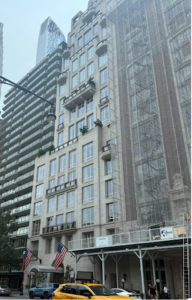
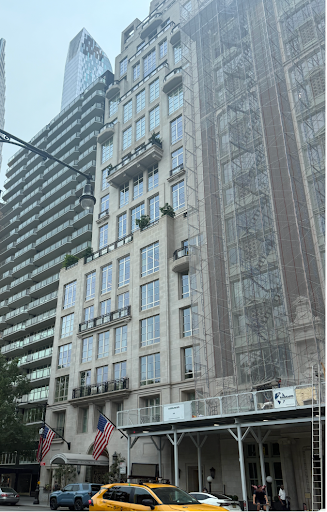
Sonia, a 61-year-old nanny, dreams of moving from New Jersey to New York City. But her main concern is the cost. She observes her wealthy clients with second homes that remain largely empty throughout the year, in contrast to herself, who is unable to afford her singular dream residence. She is hopeful for the future and believes that with Mamdani’s proposals to achieve affordable housing, she will someday be able to get her NYC apartment after all.
Since taking office in January, Mayor Zohran Mamdani has begun investing in government services such as housing, safety, and childcare that were largely underfunded by previous administrations. But because his administration has put so much money into these vital services, the city inherited a $12 billion budget gap, an even larger gap than the $4.4 billion one during the 2008 financial crisis, according to nyc.gov. In his 2027 Executive Budget, he added a pied-à-terre tax, a surcharge on nonprimary NYC residences worth over 5 million dollars, to help close the gap. The tax is projected to generate 500 million dollars annually from around 13,000 properties, according to comptroller.nyc.gov. While many working-class and housing advocates support this policy, critics believe there are better ways to close it.
Many supporters believe that the tax promotes affordable housing. Since 2019, 3.3% to 4.8% of home sales have been for above $5 million, and of those sales, between 63.8% and 74.1% represent pied-à-terres, according to realtor.com. If a pied-à-terre tax were imposed, that percentage could go down, making space for full-time residents.
On the other hand, critics believe that if the ultra-wealthy stop buying property in the city, the tax base will shrink, which could cause a decrease in funding for government services.
President Donald Trump is among critics of the tax and took to Truth Social, posting, “Sadly, Mayor Mamdani is DESTROYING New York! It has no chance! The United States of America should not contribute to its failure. It will only get WORSE. The TAX, TAX, TAX Policies are SO WRONG,” and warned that “People are fleeing.” Trump argued that the city “must change their ways, AND FAST.”
Still, Mayor Mamdani received support from New York Governor Kathy Hochul when proposing and passing this tax. When announcing the tax, she stated, “I understand, as Governor, the importance of stabilizing New York City’s finances without compromising essential services that New Yorkers count on.”
Outside of the government, New Yorkers are also divided on the issue. Jessica, a 51-year-old New York City resident, argues that second homes contribute to the city’s housing shortage and affordability crisis. “It’s taking away housing from people who live here full time,” she said. “There’s no downside to [the pied-à-terre tax]. People with that kind of money really can do with a bit less.”
Scott, a 59-year-old store manager at a high-end men’s boutique clothing store, believes that because Mayor Mamdani was elected on the promise to make the city more affordable, pied-à-terre taxes are an excellent way to follow through with that. “The money has to come from somewhere, so if there’s a little extra tax on people who are making a little more money, I think that’s fine,” he said.
Yet support for the tax is not limited to renters or those struggling with affordability. Andrew, who described himself as coming from a “mildly affluent family” that owns multiple properties, still supports efforts to discourage vacant-owned homes. When family members and friends of the 26-year-old IT System Specialist and Michigan resident talk about buying more properties and renting them out, he disagrees with them. “I’m like, you’re making the housing situation even more unaffordable for me,” he said. “I’m trying to, like, save my own payments and get my own house.” He adds that when people buy pied-à-terres, another home is taken off of the market, increasing competition for the remaining houses. “It’s freaking not affordable in this economy.”
Andrew does believe that the pied-à-terre tax will help this. “If a pied-à-terre tax magically made its way down to where my parents’ second home is, they would probably sell, hopefully opening up more housing for full-time residents,” he said.
Jenna, a 25-year-old NYU Law Student, believes that the tax is good for the city and is hopeful it would deter the ultra-wealthy from buying investment properties that remain empty, but is skeptical a tax alone would effectively do that. “People talk about driving out the higher earners in the city, but I’ve not really seen much evidence of that,” she said. She does believe that it is a good way to get the money, though. “If it works, it would be good,” she said, especially if a lot of this money goes into more affordable housing.”
While some New Yorkers question whether the tax will work, others oppose the tax entirely. An example is Elvir, a 49-year-old maintenance worker, who believes it affects people who own companies in an unfair way. “Company owners not only have to pay their own personal income tax, but they also have to pay payroll tax every week or month, depending on the work that they do,” he said. Despite believing that the tax is not fair, he believes that “a large portion of the tax revenue from New York City actually goes a ton for the pensions for city workers,” and that while these workers are important, they make a good amount of money from their pension while “Doing absolutely nothing.” New York City spends around 10 billion dollars every year on pension costs. Elvir believes that if the city reduces the amount of money going into these pensions, there will be “enough to pay for free public transportation for the whole city.”
Among the New Yorkers who support the tax, many are still worried about its effectiveness. Steven, a 67-year-old political centrist, is also skeptical, but he is concerned that pied-à-terre owners will not pay the tax. He said, “The problem is that these people have great accountants. And great accountants figure out ways to get out of [paying the tax].”